



By Scorpio/People’s Spring
“Overnight household guest registration checks. Everyone in the house, come outside.”
In Mandalay’s suburbs neighborhood, one dark evening during a power outage, a 58-year-old woman, Daw Mya (name changed), was startled awake by voices outside her home.
Daw Mya’s heart raced. She heard someone calling from infront of the house.
“Have the people in this house not come down yet?” Quickly grabbing her rechargeable flashlight, she hurried downstairs and opened the door. Outside, she found soldiers, people believed to be administrative officials, and neighborhood administrators gathered.
“Everyone else in the house, come out,” one loud, authoritarian official shouted when he saw Daw Mya.

Public Service Announcement
Daw Mya, a widow, lives with her 27-year-old son and daughter. She gently nudged her son, who had stepped out in front of her, to stand back. A high-ranking soldier among the group stared at him and asked, “What do you do for a living?”
The son replied softly, “I’m a sales assistant,” with his head lowered.
Daw Mya’s heart pounded with anxiety as she strained to hear what the officials were saying. Relief came only when she overheard someone announce they were moving on to the next house. Although the officials left and she returned to bed, she could no longer find sleep.
This persistent fear has haunted her for the past nine months. Since the military junta enacted its conscription law, each household check has renewed her worry that her son might be drafted.
Following recent losses in battles against ethnic armed groups and PDF forces, the junta has moved swiftly to implement the conscription law, originally passed 14 years ago, in an attempt to replenish its manpower.
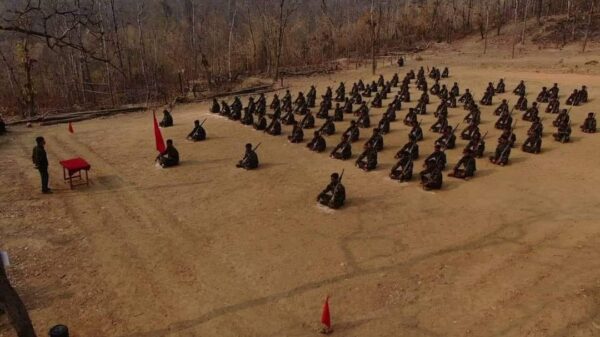
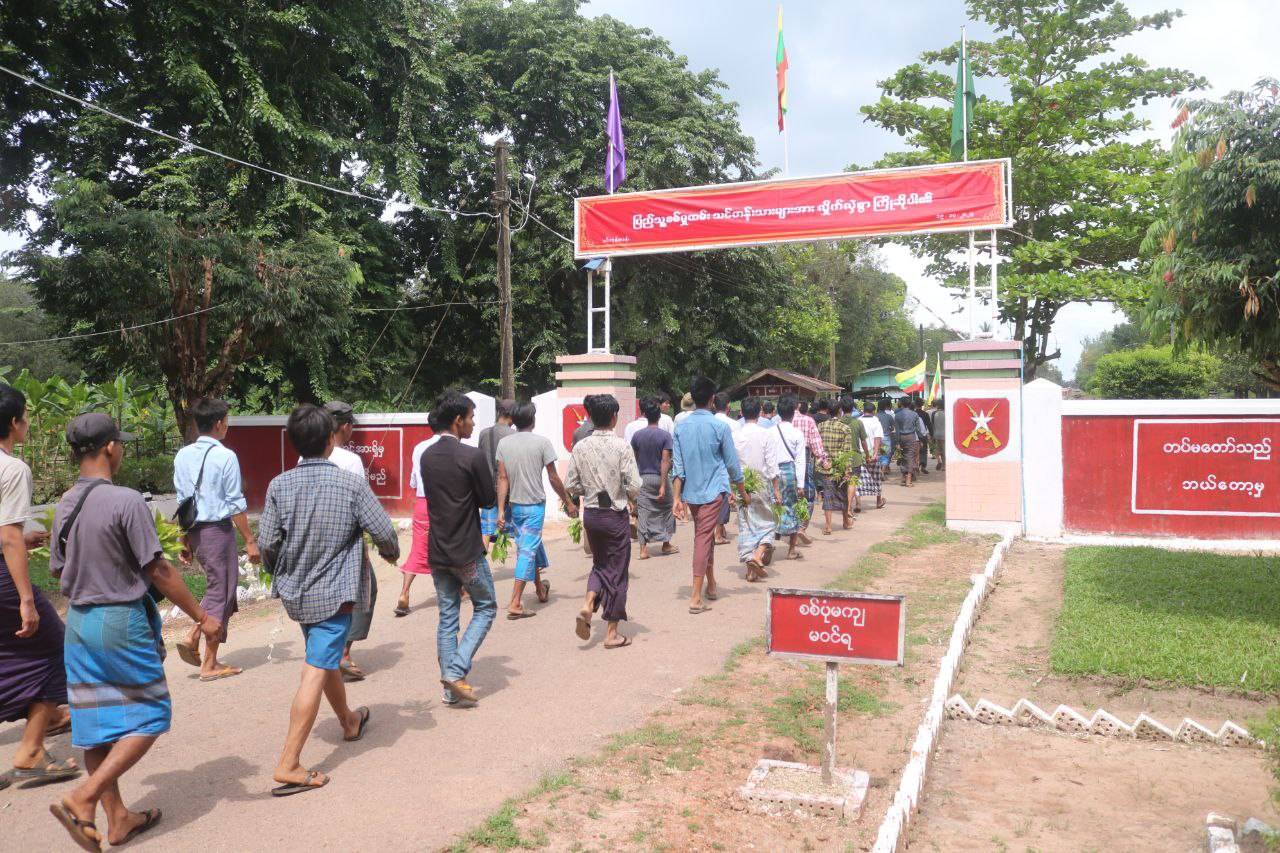
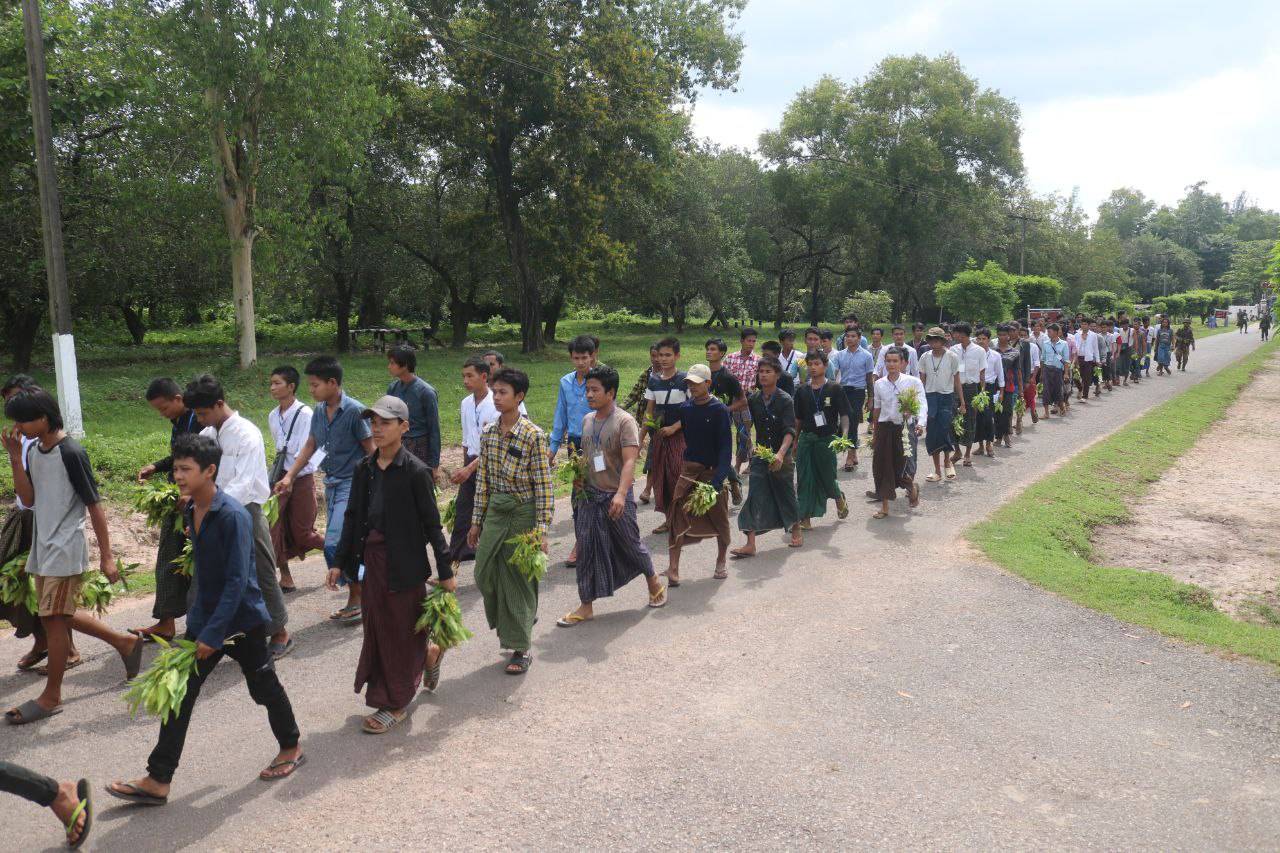
Since the announcement, the junta has conducted six nationwide training sessions for young people. According to the junta’s statement, each military training session aims to recruit 5,000 individuals, with a goal of 30,000 young people enlisted for military service in total. This has led many mothers across Myanmar to experience deep fear and emotional strain, fearing that their sons may soon be conscripted.
“I feel a surge of fear every time the authorities come around.”
In her neighborhood, she has watched as one young man after another is taken away for training, heightening her unease. As night falls, Daw Mya finds it increasingly difficult to sleep, often waking up abruptly, startled by the worry that her son could be next.
Daw Mya has lost interest in her daily activities, and even food no longer appeals to her. Her health has also taken a toll—she now experiences frequent memory lapses and heightened symptoms of high blood pressure. Her heart often races, and dizzy spells leave her feeling unsteady, so she keeps a lime with her at all times, believing it helps ease the discomfort.
“The worst part is not being able to sleep at night,” she shared, describing how her constant worry has disrupted both her mind and body.
Another individual experiencing mental strain due to the conscription law is Daw Soe, 73. Her youngest son, 28, is married and has a young child. She worries that if her son is conscripted, his family will struggle without him as the primary provider.
Like Daw Mya, Daw Soe also suffers from sleepless nights and a loss of appetite due to her worries.
“It’s unfair and meaningless. They’re just making our children suffer,” Daw Soe said.
The military junta is reportedly sending recent conscripts directly to conflict zones, according to resistance forces and family members of those drafted. Resistance groups claim that new conscripts have been among the casualties in recent battles.
Daw Nyo (name changed), 66, is from a village in Sagaing Township.
“My son was arrested in Sagaing and sent directly to Battalion 33. Now, he’s been sent on to Loikaw,” she said.
Family members report that Daw Nyo has been struggling with intense worry since her son was drafted.
According to mental health specialist Dr. Lin Lu, since the implementation of the conscription law, both mothers and fathers have been experiencing mental health issues.
“Most of the time, it’s about overwhelming worry. Parents fear that their children will be conscripted and lose their future,” Dr. Lin Lu explained.
He added that some parents experience guilt, feeling distressed because they can’t provide the means to send their children abroad like others. This self-blame has led to additional mental health challenges.
Dr. Lin Lu explains that parents’ mental health responses to stress vary depending on how they cope with their anxiety.
“There are those who feel so overwhelmed with worry that they become unable to function, and their mental health suffers significantly. But there are also parents who, despite the stress, focus on finding ways to navigate the situation and plan the best options for their children. These parents aim to support their children as best as they can in the current environment,” Dr. Lin Lu said.
The consequences of this stress can have both positive and negative effects.
“It can impact their social lives, economic stability, and daily activities. They may find it difficult to perform their regular work, their productivity may decline, and their constant worry may prevent them from doing anything else. This ongoing stress leads to a state of exhaustion,” Dr. Lin explained.
Since nearly all parents across the country are experiencing this situation, Dr. Lin Lu advises them to focus on doing what they can within their own means.
“Rather than thinking about what others can do or comparing oneself to others, it’s better to concentrate on what can be done now. Choosing paths that feel possible and practical for themselves and their children is essential,” he suggested.
Currently, the junta is using its conscription law to forcibly recruit eligible individuals, often by raiding homes and pressing families into paying fees to avoid conscription. In some townships, it is reported that families are required to pay 30,000 MMK per household to avoid service, while bribes for exemption can amount to hundreds of thousands of MMK.
For people like Daw Soe and Daw Mya, fleeing abroad or to liberated areas is not a feasible solution. Moving abroad feels out of reach, and relocating to a liberated area would mean leaving behind not only their sons but also other family members, which makes it difficult.
If they can’t locate the son, the mother or the father will be arrested, so we both have to leave together. Daw Mya said.
Mothers in liberated areas are spared from the stress of the military junta’s conscription law, as it does not apply there. However, they still experience anxiety due to fears of military offensives or airstrikes by the junta’s forces.
Some mothers of young people who joined the People’s Defense Forces (PDF) experience worry but are not overwhelmingly anxious, according to the mental health professional mentioned above.
“There’s a sense of worry because their children are doing what they want, but there’s also a sense of pride,” said a mental health professional from a liberated area.
An official from the Assistance Association for Political Prisoners (AAPP) who oversees the mental health support program has shared some techniques to help mothers cope with their worries.
“Talking to trusted people in their circle, engaging in activities that bring them joy, practicing meditation, or focusing on their faith can be effective ways to alleviate stress,” he suggested.
Daw Soe and Daw Mya have both tried meditation. To ease her worries, Daw Mya sits in front of the Buddha, offering her prayers and practicing breathing exercises.
“I keep trying to meditate, but my mind keeps going back to the same place,” Daw Mya explained, still unsettled.
The AAPP official emphasized the importance of self-care practices and advised mothers to try techniques that can help them regain mental calmness, enabling them to think through solutions more clearly.
As this article was being written, the junta was preparing to open the seventh round of military training sessions. In certain neighborhoods where Daw Mya lives, local administrators have begun delivering summons for young people eligible for conscription, urging them to report to government offices.
Like many mothers, Daw Mya waits with quiet dread, wondering when the next knock on the door will bring a “conscription letter” for her son.