



People’s Spring
The resistance forces announced their willingness to meet with Military Council officials who accept the six consensus political objectives set by the National Unity Government (NUG) and ethnic revolutionary organizations (EROs), making the offer during coup leader Min Aung Hlaing’s visit to China.
Even if the resistance forces succeed in removing the coup leaders, some Military Council officers will remain, and among them, there may be those who accept the six consensus political objectives, making negotiations with them essential for a peaceful transfer of power, NUG’s U Tin Tun Naing, Union Minister for Planning, Finance, Industry, Investment, and Foreign Economic Relations, said on November 5 at a joint press conference with K2C (Karenni, Karen, and Chin ethnic organizations).
“If certain Military Council officers accept these six political objectives, even if the entire Military Council does not, we will need to engage with them on ending the military dictatorship and ensuring a peaceful transfer of power. There is no way to skip these steps. We will definitely talk with Military Council officials who accept either the full six objectives we’ve set or the three most critical points if we summarized them,” he said.

Public Service Announcement
On 31 January, the National Unity Government (NUG) announced six political objectives aimed at preserving and promoting the unique identities of Myanmar’s diverse ethnic communities, with a vision of establishing a federal democratic union founded on democracy, national equality, and self-determination. These objectives are as follows.
- To overturn the usurpation of state power by the military, and to terminate the involvement of the armed forces in politics.
- To ensure that all armed forces operate solely under the command of a civilian government elected through democratic processes.
- To abrogate the constitution of 2008 in its entirety, and to quash all attempts to reinstate its provisions.
- To draft and promulgate a new constitution that embodies federalism and democratic values, garnering the consensus of all relevant parties,
- To establish a new federal democratic union in accordance with the proposed federal democratic constitution.
- To institute a system of transitional justice in order to address and remedy the injustices inflicted upon innocent parties throughout the conflict.
The six objectives can be summarized into three main points: ending the coup and removing the Military Council from politics, drafting a new federal democratic constitution, and establishing transitional justice mechanisms for those unjustly affected by the conflict, said Padoh Saw Thadaw Moo, Secretary General of the Karen National Union (KNU), at the press conference.
U Tin Tun Naing added that if the coup Military Council accepts the six objectives set by the NUG and K2C, the first phase of the current revolution can be considered a success. K2C is a coalition that includes the Karenni National Progressive Party (KNPP), the Chin National Front (CNF), and the KNU.
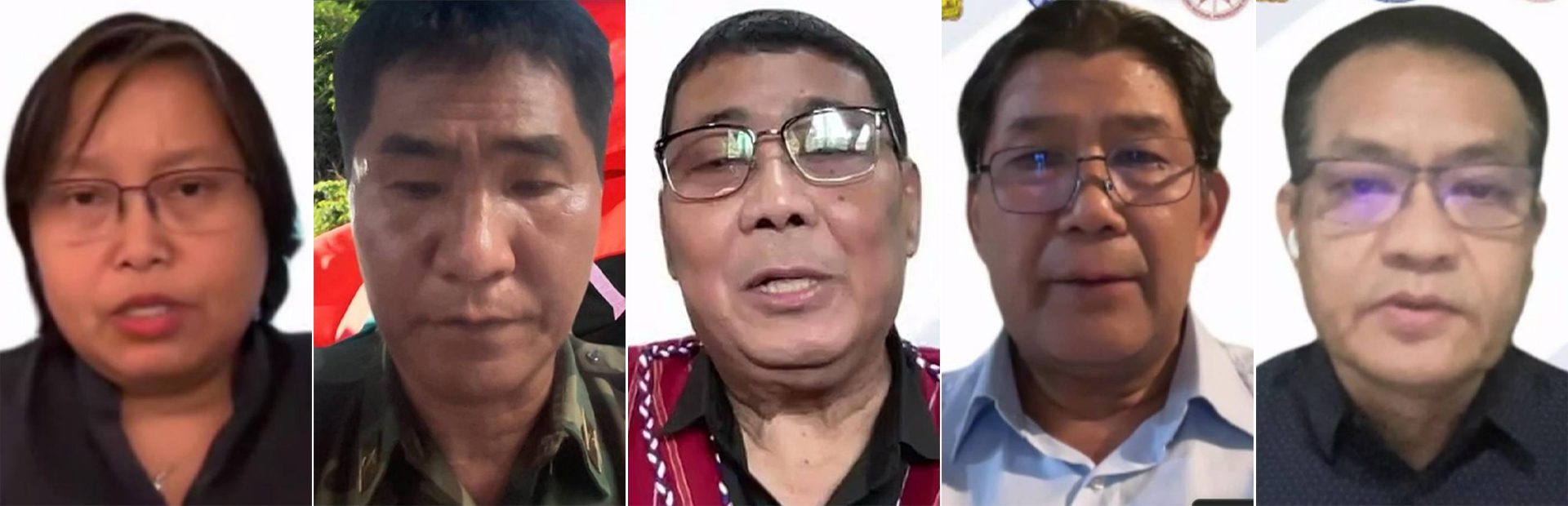
“If the Military Council accepts these six objectives, we could say our revolutionary goals are 90 percent achieved. However, even then, some final touches are necessary. The Military Council must take responsibility for ensuring justice for the atrocities committed during the conflict. Realistically, we don’t expect those who committed such crimes to negotiate with us, but once that leadership is gone, the critical next step is to work with remaining Military Council officers on a peaceful transfer of power. That’s why we included this in our consensus political objectives. Many people discuss these issues superficially, so I’m providing a fuller explanation here,” he elaborated.
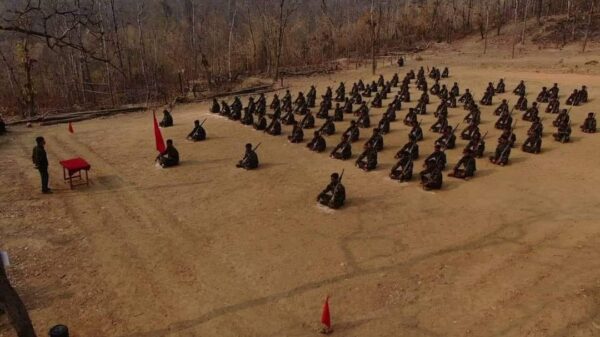
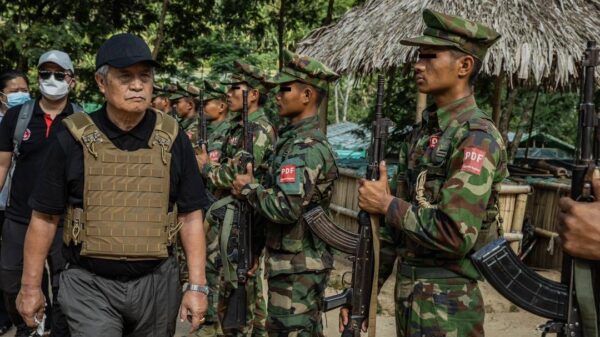
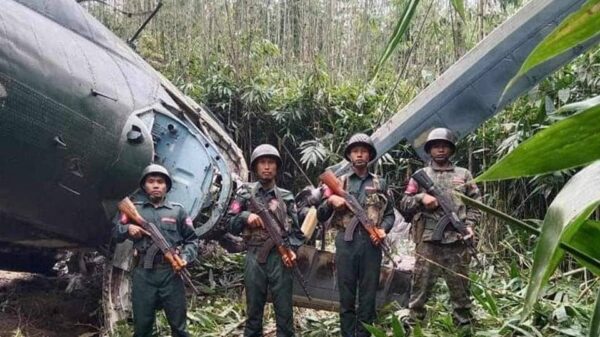
Currently, various resistance forces have seized at least 86 towns across Myanmar, with many more under siege. The Arakan Army (AA) is intensifying offensives to capture Maungdaw, Ann, Gwa, and Taungup towns in Arakan (Rakhine) State, while the People’s Defense Force (PDF) coalition is active in Indaw and Tigyaing towns in Sagaing Region.
Military Council head Senior General Min Aung Hlaing is visiting China for the first time since leading the coup in February 2021. He is attending the 8th Greater Mekong Subregion (GMS) Summit, being held on 6 and 7 November in Kunming, Yunnan Province. On 5 November, Min Aung Hlaing departed from Naypyidaw’s Aylar Airport, and two hours later, an improvised mine exploded at the airport.